


Is Upstox Worth It? Honest Review of Charges, Pros, Cons and Referral Earnings

Upstox is one of those apps that sounds simple at first: open an account, trade stocks, maybe earn from referrals. Then you look closer and the real question shows up.
Is it actually good for investing and trading, or is it just another discount broker with a shiny app?
Here’s the honest version: Upstox can be worth it if you want a low-cost Indian broker with a clean mobile app and basic trading tools. It’s not perfect. The charges matter, the app experience won’t suit everyone, and referral income is not something you should treat like guaranteed money.
Also, quick disclosure before we get into it.
Affiliate disclosure: If this post includes or later adds an Upstox referral link, I may earn a referral reward when you sign up and complete the required conditions. That doesn’t change the review. Don’t open an account just for my referral reward. Open one only if the broker fits how you invest or trade.
This post is for information only. It’s not financial advice, and it’s definitely not a recommendation to trade more than you can afford to risk.

What Upstox is best for
Upstox is an Indian stockbroker that lets you invest and trade through its app and web platform. You can use it for things like:
Equity delivery
Intraday trading
Futures and options
Mutual funds
IPO applications
ETFs
Commodities and currencies, depending on the enabled segments
Its main pitch is simple: low brokerage, fast account opening, and an app that doesn’t feel too old-school.
That makes it attractive if you’re starting out, or if you already know the basics and want a discount broker instead of a traditional full-service broker. You don’t get hand-holding like a relationship manager calling you with stock ideas, but that’s also why the cost is lower.
For long-term investors, Upstox works well enough for buying stocks, ETFs, and mutual funds. For active traders, the bigger question is platform stability, order execution, charting, and total charges.
So, Is Upstox Worth It? Honest Review of Charges, Pros, Cons and Referral Earnings really comes down to your use case. A casual investor and an options trader will judge the same app very differently.
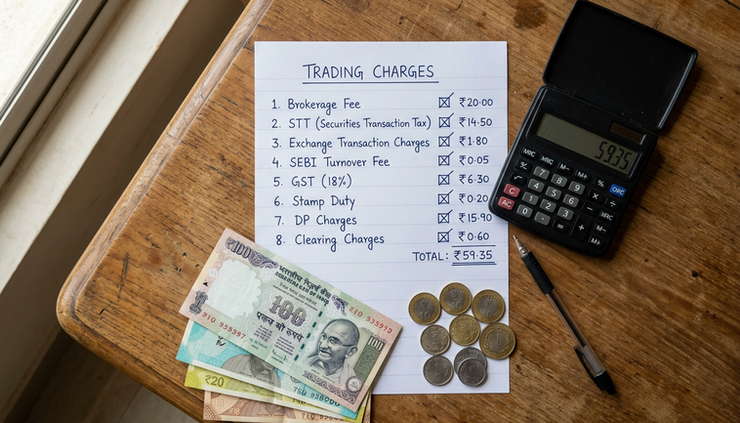
Upstox charges explained without the usual confusion
Brokerage ads love showing the smallest possible number. But your actual trading cost has more parts than just brokerage.
With Upstox, the exact pricing can change based on offers, account type, and regulatory updates, so always check the latest pricing page inside Upstox before signing up. Still, the usual structure for discount brokers like Upstox includes the following charges.
Charge type | What it means |
Account opening charge | Often free during promotions, but check before applying |
Annual maintenance charge | May be free or charged depending on the current plan and offer |
Equity delivery brokerage | Often advertised as low or zero brokerage, but confirm current terms |
Intraday brokerage | Usually charged per executed order or as a percentage, with a cap |
F&O brokerage | Usually charged per executed order, subject to the broker’s pricing plan |
Exchange transaction charges | Charged by exchanges like NSE and BSE |
STT or CTT | Securities Transaction Tax or Commodities Transaction Tax, set by rules |
GST | Applied on brokerage and some charges |
SEBI charges | Small regulatory charge |
Stamp duty | Varies by transaction type and state rules |
DP charges | Charged when shares are debited from your demat account |
The part many beginners miss is DP charges.
If you buy a stock and sell it later from your demat account, depository participant charges can apply on the sell side. It’s not unique to Upstox. Other brokers also charge it. But if you’re buying and selling small quantities often, DP charges can feel annoying because they’re not always front and center in the ad.
Another thing to remember: “zero brokerage” doesn’t mean zero cost. You may still pay statutory and exchange charges.
Here’s a simple way to think about it.
If you invest ₹10,000 in one stock for the long term, charges may be small enough that they don’t affect your decision much. If you place many trades every day, even a small fixed brokerage plus taxes and exchange charges can add up fast.
That’s why you should check the contract note after your first few trades. It shows exactly what you paid. Don’t rely only on the app’s marketing page.
What I like about Upstox
Upstox has a few clear strengths. None of these make it perfect, but they do explain why many people choose it.
The app is easy enough for beginners
The Upstox app is cleaner than many older broker platforms. You can search for stocks, place orders, check holdings, and track positions without feeling completely lost.
That matters more than people admit. If an app feels confusing, beginners make mistakes. They may pick the wrong order type, sell from the wrong tab, or misunderstand margin.
Upstox still has a learning curve, especially for F&O and intraday trading, but basic investing is simple enough.
Brokerage is competitive
Upstox belongs in the discount broker category, so its pricing is usually competitive when compared with traditional brokers. If you’re coming from a broker that charges high percentage-based brokerage, the difference can be noticeable.
For delivery investors, the cost can be low. For active traders, the fixed-per-order style can be helpful if your trade sizes are large enough. For very small trades, even a capped brokerage can feel high in percentage terms.
Account opening is quick
Like most modern brokers, Upstox uses online KYC. If your Aadhaar, PAN, bank account, and mobile number are ready, you can usually complete the process without paperwork.
Promotional offers often make account opening free, but don’t assume that forever. Check the current offer before you submit your application.
It covers most common needs
For a normal retail user, Upstox has enough features:
Stocks
F&O
IPOs
Mutual funds
Watchlists
Charts
Price alerts
Reports and contract notes
It may not satisfy every advanced trader, but it covers the basics well.
Referral rewards can be a nice extra
Upstox often runs referral programs where you can invite friends and earn rewards if they sign up and meet the required terms.
That sounds attractive, but treat it as a bonus. Referral rewards change. Campaigns can end. Payouts may depend on account activation, first trade, segment activation, or other conditions.
If someone says, “Earn ₹1,200 per referral,” ask one question first: what are the current terms?
Referral income is not guaranteed income. It’s marketing income, and marketing campaigns change all the time.
Where Upstox can disappoint you
Every broker has weak spots. Upstox does too.
Pros
Low-cost brokerage structure
Beginner-friendly app
Fast online account opening
Good enough for basic investing and trading
Referral program can add extra income
Cons
Total charges can still add up
DP charges may surprise beginners
Customer support can feel slow during busy periods
Advanced traders may want deeper tools
Referral rewards depend on changing campaign rules
Customer support may not always feel personal
Discount brokers keep costs low by keeping the service model lean. That means you may not get the same personal attention that some full-service brokers provide.
If you’re stuck with an account issue, payout delay, nominee update, or segment activation problem, you’ll likely deal with tickets, chat, or standard support flows.
For many users, that’s fine. For someone who wants quick human help, it may feel frustrating.
The app can feel limited for serious chart users
Upstox has charts and trading tools, but serious traders often want more.
If your trading depends on advanced chart layouts, custom indicators, fast hotkeys, or complex options analysis, you may prefer a specialized charting platform or a broker with stronger trader-focused tools.
That doesn’t mean Upstox is bad. It means the platform may be better for regular users than power users.
Outages and glitches can happen
This is true for most brokers, not just Upstox. During high-volume market days, trading apps can slow down or face order issues.
The problem is bigger for intraday and F&O traders because timing matters. A few seconds can change the trade.
If you trade actively, don’t judge any broker only by its brokerage. Judge it by stability, order execution, reports, and support during stress.
Low brokerage can encourage overtrading
This one is less about Upstox and more about human behavior.
When trades look cheap, people trade more. More trades mean more chances to make mistakes. Even if brokerage is low, losses from bad trades are not low.
If you’re new, use Upstox for investing first. Learn order types. Understand stop loss orders. Read contract notes. Then think about active trading.

Upstox compared with Zerodha, Groww, and Angel One
A review feels incomplete without comparisons. Here’s the honest short version.
Upstox vs Zerodha
Zerodha is often seen as the benchmark among Indian discount brokers. Its Kite platform is popular with traders, and the brand has built strong trust over time.
Upstox feels more app-first and beginner-friendly in some areas. Zerodha may appeal more to users who like a mature trading ecosystem, educational content, and tools like Console and Coin.
For a beginner, both can work. For active traders, compare platform reliability, charting comfort, and reports before choosing.
Upstox vs Groww
Groww is extremely simple. It’s popular with mutual fund and stock investors who want a clean, easy experience.
Upstox feels more trading-focused than Groww. If you just want mutual funds and occasional stock investing, Groww may feel easier. If you want to trade intraday or F&O, Upstox may feel more suitable.
Upstox vs Angel One
Angel One has a broader full-service history and also competes heavily in the discount broking space. It may appeal to people who want research, advisory-style features, or a more traditional broker feel with modern pricing.
Upstox is better if you want a simpler discount broker experience without too much extra noise.
The best choice isn’t the one with the loudest offer. It’s the one you’ll actually use correctly.
Upstox referral earnings explained honestly
Let’s talk about the part many old blog posts overhype: referrals.
Upstox referrals can earn you money, but the amount and conditions depend on the active campaign. Sometimes the reward may be cash, vouchers, wallet credit, or another benefit. Sometimes there may be a higher reward for specific conditions. Sometimes the offer may be lower than what older posts mention.
So if you see a headline like “Earn ₹1,200 with Upstox,” don’t assume that amount is currently valid.
Before promoting or sharing your referral link, check:
The current referral reward amount
Whether the referred person must complete KYC
Whether they must place a trade
Whether rewards are capped
Whether self-referrals are banned
When payouts happen
Whether taxes or deductions apply
Whether the program can change without notice
Also, be honest when sharing your link. Tell people you may earn a reward. Don’t push them into opening an account if they don’t need one.
A good referral converts better when it sounds like this:
“I use Upstox because the app is simple and charges are competitive. Check the latest fees before opening. If you use my link, I may earn a referral reward.”
That’s much better than promising easy money.
Who should use Upstox and who should skip it
Upstox is a good fit if you want:
A low-cost broker for basic stock investing
A clean mobile app
Quick account opening
Access to equity, F&O, IPOs, and mutual funds
A referral program as a side benefit, not the main reason to join
You may want to skip Upstox if you need:
Very personal customer support
Advanced trading tools built into the broker platform
Research-heavy recommendations
A full-service broker experience
A broker only because of a referral bonus
The referral bonus should never be the main reason to choose a financial platform. Fees, trust, usability, and support matter more.

Final verdict
Upstox is worth considering if you want a budget-friendly broker with a simple app and enough features for normal investing and trading. It’s not the only good option, and it’s not automatically better than Zerodha, Groww, or Angel One.
The biggest thing is to look past the headline offer.
Check the current brokerage. Check DP charges. Read the referral terms. Place a small order first and review the contract note. If the platform feels comfortable and the costs make sense for your style, Upstox can be a solid choice.
If you’re opening an account only because someone shouted “Earn ₹1,200,” slow down. A referral reward is nice, but a broker is something you may use for years. Pick the one that helps you invest calmly, trade carefully, and understand what you’re paying.


Comments